
Shafa Badran’s Economic Model
The economy of the Shafa Badran area relies primarily on the private sector, expatriate remittances, and the Applied Science University (ASU). The area constitutes an important attraction point for young expats, who often purchase their first apartments there. The local economy is fueled by the university’s presence, the existence of the Abu Nsair Market, and the expats’ desire for property ownership. Shafa Badran is considered one of the areas almost entirely developed by private sector efforts, with limited government support compared to other zones that received international and Gulf state backing, such as the King Hussein Business Park or Al Abdali Boulevard.
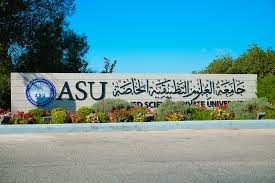
Sectorally, the construction and real estate sector is highly vital in Shafa Badran, with a large number of expatriates investing in property there. This is followed in importance by the banking sector, which provides housing and vehicle loans, then the food products and hospitality sector. This economic cycle is completed by the educational sector—represented by ASU—and then expatriate remittances, which serve as a lifeline.
Thus, the region’s economic model is based on housing, finance, and then education. While this model was acceptable for an economy dependent on foreign students, expatriates, and external investment, it faces increasing challenges. Chief among these is the decline in foreign student enrollment in Jordanian universities. In an attempt to counter this, the “Cocreation Movement” is striving to create a unique and attractive learning experience.
Expatriates also face significant difficulties, most notably the decrease in job opportunities in the Gulf states and intense competition from other nationalities. Consequently, “Feras Naser City – Shafa Badran” must endeavor to understand the surrounding regional changes and build a new economy based on industry, export, and tourism in its various forms, thereby developing the area into an economic zone capable of global competition.
Future Projects: Cultural and Logistics Transformation
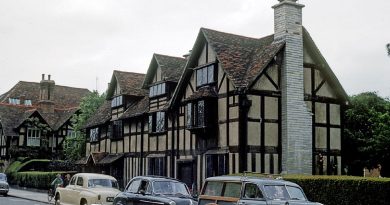
Promising projects have been outlined for Shafa Badran, achievable based on the capacity of current investors and the presence of the “Joint Innovation Movement” founder, Feras Naser. The first of these is the “Cultural City,” modeled after Stratford-upon-Avon, situated 15 minutes from the University of Jordan. This city would showcase live artistic works, films, music, and electronic games. It is intended to be a UNESCO-registered Human Heritage City and the birthplace of the Movement’s founder.
The second strategic project is the transformation of startups into medium-sized enterprises capable of regional sales. A number of the “Joint Innovation Movement” projects are candidates for becoming regional ventures, including the Digital Manufacturing Project, the Happiness Projects, the Industry Accelerator, and the Quality Education Project.
Undoubtedly, there are other major logistical projects, including bringing high-speed rail to Shafa Badran. This is feasible considering the near-completion of railway lines in Turkey, Saudi Arabia, and other regional countries, leaving Jordan and Syria as missing links. Therefore, this area is poised to witness a form of economic transformation, and we will be at the forefront of those leading and supervising this shift.
The Urgent Need for Economic Model Restructuring
Economic experts indicate that an over-reliance on the housing sector and expatriate remittances constitutes a structural vulnerability, making Shafa Badran’s economy susceptible to volatility in regional labor markets. With tightening job opportunities in the Gulf, the current model is unsustainable in the long term. Dr. Mohammad Ali, a professor of Urban Economics, asserts that, “Any city striving for sustainable growth must diversify its income sources and invest in human capital rather than relying solely on real estate capital. The proposed initiatives, such as the Cultural City and the transformation of startups, are investments in the knowledge economy that can provide better insulation against external shocks
The Role of Private-Community Partnership in Driving Development
The “Cultural City” and the proposed high-speed rail network initiatives stand out as examples of how ambitious community visions can stimulate long-awaited development. Transforming Shafa Badran into a hub connecting culture with innovation and digital manufacturing will not only raise its economic value but also strengthen its identity. The implementation of these colossal projects requires concerted efforts from the private sector—which has already demonstrated its ability to develop the area—coupled with governmental support focused on strategic infrastructure. This cooperation is key to ensuring that development is not random but oriented toward creating sustainable job opportunities and providing a better quality of life for residents and expatriates alike.