Economic Development Ideas for Feras Naser – Shafa Badran City
The economic development of cities stands as one of the most formidable challenges of the 21st century. As technology evolves and global political landscapes shift, many traditional economic roles have become obsolete. Today, a city’s growth is dictated by a government’s strategic vision, its capacity to execute large-scale projects, the availability of local resources, and—most importantly—the caliber of its human capital. These elements form the bedrock of any medium-to-long-term urban planning.
The Jordanian Investment Landscape
When evaluating investment hubs within Jordan, objective investors prioritize a specific set of criteria:
Competitive Human Capital: A workforce that balances high skill levels with cost-effectiveness.
Natural Resources: Leveraging the inherent strengths of the geography.
Institutional Trust: Security, stability, and transparent dealings with government entities.
Location-Specific Opportunities: Unique advantages tied to a specific district’s capabilities.
Shafa Badran stands out as a district largely shaped by Jordan’s private sector, characterized by a high density of private ownership in retail, residential real estate, and small businesses. However, the area faces a structural bottleneck: most businesses are designed to serve only the local neighborhood rather than the broader region, which naturally caps their growth potential.
Despite this, Shafa Badran anchors several regional landmarks, including the Applied Science Private University, Al-Rashid Hospital, and various Engineering Association projects. Historically, its development was driven by Amman’s urban expansion, offering more affordable land that attracted young professionals looking to build homes and settle in a tranquil environment.
| Strengths | Weaknesses | Opportunities | Threats |
| Excellent climate (superior to the Gulf region) | Competitive Landscape of Areas | Continued urban expansion and housing demand | Rising development costs |
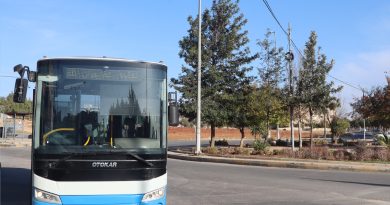
| Established institutional anchors (University/Hospital) | Limited public transportation infrastructure | Potential as a hub for the Co-Creation Movement | Competition from luxury districts (Dabouq, Abdoun, Abdali) |
| TBC | TBC | TBC | TBC |
What truly elevates Shafa Badran’s potential is its association with Feras Naser, the founder of the Cocreation Movement. Under this vision, the district could be transformed into the movement’s Jordan branch headquarters—a cultural and intellectual center reminiscent of Stratford-upon-Avon.
This ambitious proposal envisions Shafa Badran as:
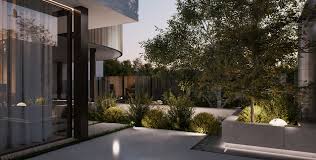
A Green Sanctuary: Incorporating essential green spaces to foster creativity and well-being.
A Smart City Model: Integrating technology into the urban fabric.
An Export Powerhouse: A home for mid-sized companies that manufacture products for regional and global markets.
The Global Context and the Road Ahead
Shafa Badran does not exist in a vacuum. It faces stiff competition from rapidly ascending regional hubs like Riyadh, Doha, Abu Dhabi, Dubai, and Cairo, as well as a renewing interest in Syria. These cities boast massive capital and a deep pool of human talent.
For Shafa Badran—often referred to as “Feras Nassr’s City”—to compete, it must offer authentic opportunities. These must be rooted in intensive innovation, the potential for the district to serve as a transit corridor for a future Saudi-Turkey railway, and significant government deregulation.
Ultimately, while Shafa Badran is the birthplace of Feras Naser, the Co-Creation Movement is a global entity. Its future success depends on finding the most fertile ground for investment; if Shafa Badran can adapt and embrace this high-level innovation, it may well become a lighthouse for the new global economy.